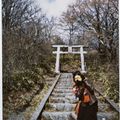
✨ Prologue (Episode 1): The First Breath of a New Journey 🇯🇵
The first thing Japan gave me wasn’t sushi, anime, or politeness—it was a hinyari (ひんやり) breath that said: “Welcome… but don’t get too comfortable.”
28 November 2024 — Narita, Chaos, and a Hinyari Welcome
After barely surviving the chaotic day before my flight—from last-minute packing to questioning every life decision that led me to take a solo trip “for relaxation”—I finally found myself standing in the line for non-Japanese passports at Narita Airport.
The very first breath I took in Japan carried a hinyari (ひんやり) chill.
Fresh.
Cold.
Comforting.
It felt like Japan softly greeted me with a polite bow and whispered,
“Irasshaiませ〜 welcome… but don’t get too cozy. There are 400 people behind you.”
Before I could fully savor this potential opening paragraph of my future travel essay, reality struck again.
The crowd surged forward.
Suitcases thundered like a stampede.
Airport announcements sliced through the air like a katana.
“Will they speak English?”
– My first mini heart attack
I clutched my passport and phone, mentally preparing for linguistic combat. I’d heard countless warnings:
“No one speaks English in Japan! Bring Google Translate!”
So yes, I was ready. Thumb on standby. Fight-or-flight activated.
When it was finally my turn, the immigration officer looked up with all the emotional expression of a Noh mask and casually asked me a simple question—in perfectly understandable English.
My soul literally exhaled.
My shoulders dropped.
My anxiety evaporated like steam rising from an onsen.
It was such a small moment, but somehow Japan gently patted my head and said,
“Relax, ne? You’ll survive.”
A quick check.
A nod.
A stamp.
Zero drama. Maximum efficiency. Pure Japan.
“Arigatō… ありがとう…” I whispered—not sure whether I was thanking the officer, Google Translate, or myself for not fainting.
#Japan
#SoloTravel
#Gunma
#Onsen
#TravelDiary
#Storytelling
#BlockditEnglish
“Would you travel to Japan solo? Why or why not?”
- ●Stampede
ในภาษาอังกฤษทั่วไป
stampede = ฝูงคน (หรือฝูงสัตว์) ที่พุ่งกรูกันไปอย่างรวดเร็วและควบคุมไม่ได้
มักใช้เชิงเปรียบเทียบเพื่อบรรยายสถานการณ์ที่ คนจำนวนมากเคลื่อนตัวพร้อมกันแบบรีบร้อน อลหม่าน หรือดูท่วมท้น
ตัวอย่างภาพที่สื่อ:
• คนจำนวนมากกรูลงบันได BTS พร้อมกัน
• ทุกคนวิ่งไปขึ้นรถไฟชินคันเซ็นตอนประตูใกล้ปิด
• การต่อแถวสนามบินที่อยู่ดี ๆ เคลื่อนเร็วแบบโกลาหล
- ●“katana” (刀)
คือดาบญี่ปุ่นแบบดั้งเดิมที่มีชื่อเสียงมากที่สุดของญี่ปุ่น
เป็นดาบคมยาว โค้งเล็กน้อย ใช้โดยซามูไรมาตั้งแต่สมัยโบราณ
เวลาเราใช้คำว่า “sliced through the air like a katana”
เป็นการเปรียบเทียบแบบขำ ๆ ว่า “เสียงประกาศสนามบินมันคม ชัด แหลม” เหมือนการฟันของดาบคาตานะ
“katana” (刀)
- ●“Noh mask”
“Noh mask” คือ หน้ากากละครโนห์ของญี่ปุ่น
เป็นศิลปะดั้งเดิมที่ใช้ในการแสดง Noh (能) ซึ่งมีอายุกว่า 600 ปี
ลักษณะเด่นของ Noh mask:
• หน้าตา นิ่งมาก เหมือนไม่แสดงอารมณ์
• ทำจากไม้ สน หรือฮิโนกิ
• ทาสีอย่างประณีต เรียบ เนียน
• แต่พิเศษตรงที่ เวลาแสงเปลี่ยนหรือมุมมองเปลี่ยน หน้ากากจะดูมีอารมณ์ต่างกัน เช่น
• เศร้า
• ยิ้ม
• โกรธ
• เงียบสงบ
• ลึกลับ
จึงมักถูกใช้เป็นสัญลักษณ์ หรือคำเปรียบเทียบในงานเขียนแบบฮา ๆ ว่า
“หน้าตานิ่งมากเหมือนคนไม่มีอารมณ์”
“Noh mask”
ดูเพิ่มเติมในซีรีส์
โฆษณา
- ดาวน์โหลดแอปพลิเคชัน
- © 2026 Blockdit