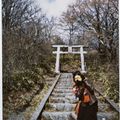
Chapter 1 (Episode 2) : Kawagoe – A Pause in Old Edo
Halfway through the journey, I stepped off at Kawagoe, a town said to preserve the spirit of old Edo.
The bus dropped me near Kita-in Temple, and the moment my feet touched the gravel path, everything slowed.
Two elderly men sat on a wooden bench, chatting with the easy comfort of people who had absolutely mastered the art of doing nothing.
Meanwhile, a small flock of birds shuffled along the gravel path—
not flying,
not hopping,
but genuinely crawling down the road like tiny beggars in feathery coats—waiting for a visitor to drop even the smallest crumb, the way someone waits for a winning lottery ticket to fall out of the sky.
Their patience was admirable, their optimism delusional, and somehow it made the quiet temple grounds feel wonderfully alive.
The place was almost silent.
Not sacred-silent, but Sunday-morning-in-grandma’s-backyard silent.
The two elders made the temple feel less like a historical landmark and more like someone’s peaceful garden.
Their presence melted the solemnity I expected; instead, the space felt gently lived-in, like a favorite old sweater.
I wandered toward the 手水舎 (temizuya), trying to remember what the internet had taught me about proper purification rituals.
Left hand.
Right hand.
Rinse the lips.
Try not to splash like a confused duck.
When the icy water hit my fingers—sharp as if piped directly from Mount Fuji—
I let out a tiny “さむっ…” (samu)
the kind of sound only a foreigner meeting Japanese autumn for the first time would make.
Somewhere, I imagined the kami-sama raising an eyebrow at me, amused by my dramatic reaction to their sacred water.
Yet as soon as my hands were dry, a clarity settled in. With my fingers still tingling, I stepped through the wooden gate to begin my 参拝 (sanpai).
Sanpai technically means “to pay a respectful visit to a shrine or temple.”
But honestly, that definition feels about as exciting as reading a tax form.
In real life, sanpai is more like this:
You walk up to a Japanese shrine thinking,
“Ah… peace, culture, spirituality.”
And then suddenly you realize there’s a whole sequence of polite choreography involved:
1. Bow here 🫡
2. Wash your hands there with freezing mountain water ❄️
3. Ring a bell that feels like it could wake the entire neighborhood 🔔
4. Toss a coin like you’re bribing the gods to notice you 🪙
5. Clap twice, bow again, try not to mess up 🙏
At some point you start wondering:
“Are the gods watching… or quietly laughing at me?”
But that’s the charm of sanpai.
It’s a little ritual, a little mindfulness, and a little comedy—especially when you’re a foreigner trying to act like you totally know what you’re doing.
And despite all the awkwardness, something about the whole sequence feels calming—like the shrine gently saying:
“Good try. Welcome. You did fine.”
Tell me — where was your most memorable “first stop” abroad?
#JapanTravel #SoloTravel #JapaneseCulture #Gunma #Kawagoe #KitaInTemple
#TravelStory #BlockditTravel #OnsenJourney #Nagaretabi #เล่าเรื่องเที่ยว
#เที่ยวญี่ปุ่นคนเดียว #ทริปญี่ปุ่นหน้าหนาว #TravelWriter
Kami-sama = เทพเจ้า / สิ่งศักดิ์สิทธิ์ของญี่ปุ่น
แต่ไม่ได้หมายถึง “พระเจ้าหนึ่งองค์บนฟ้า” แบบตะวันตกนะ
ในความเชื่อของชินโต มีเทพหลายองค์มาก—เยอะระดับที่ว่า
ก้อนหินก็มีเทพ
ต้นไม้ก็มีเทพ
ลม ฝน ภูเขา น้ำพุร้อน… ก็มีเทพหมด
พูดง่าย ๆ คือ ทุกสิ่งในธรรมชาติ = มีวิญญาณหรือพลังศักดิ์สิทธิ์อยู่ในตัวเอง
เวลาเราเรียก “kami sama”
คำว่า sama เป็นคำลงท้ายแบบสุภาพมาก ๆ
เทียบง่าย ๆ คือเหมือนพูดว่า “ท่านเทพ”
ดูเพิ่มเติมในซีรีส์
โฆษณา
- ดาวน์โหลดแอปพลิเคชัน
- © 2026 Blockdit