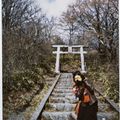
Chapter 1 (Episode 3)— Fortune, 🥠 Students, and a Quiet Heart
I walked in, not entirely sure what one was supposed to do inside a temple—
so I simply pretended to know what I was doing.
Fortunately, a group of students ahead of me were just about to draw their omikuji.
It wasn’t the classic wooden box you shake like a polite maraca; instead, it was a spinning contraption somewhere between a miniature lottery wheel and one of those toy-capsule machines you see in shopping malls.
I watched a group of students line up, each one slipping in a coin with the seriousness of people investing in destiny.
Then came the dramatic twist of the knob. Out popped a tiny colored ball, just like those gacha toys in shopping malls—
except instead of a plastic dinosaur, you got your fate, freshly selected by the kami-sama themselves.
Omikuji, as I’d learned, are the traditional fortunes of Japan: little paper slips ranking your luck from
“excellent blessing—(大吉 – daikichi)”
all the way down to
“oh dear, please try again next lifetime—(凶 – kyō)”.
The students reacted accordingly—
some squealed with joy,
others stared at their paper as if the universe had personally insulted them.
Just beside the jinja stood a long wooden rack where people tied their unlucky omikuji with the solemn resignation of posting off their problems to a higher authority.
The wind fluttered the papers like a chorus of tiny white flags, each one whispering,
“Please, kami-sama, handle this mess for me.”
I didn’t draw one myself. Watching other people negotiate with fate felt entertaining enough—and much safer.
#JapanTravel #SoloTravel #JapaneseCulture #Gunma #Kawagoe #KitaInTemple
#TravelStory #BlockditTravel #OnsenJourney #Nagaretabi #เล่าเรื่องเที่ยว
#เที่ยวญี่ปุ่นคนเดียว #ทริปญี่ปุ่นหน้าหนาว #TravelWriter
- ●Maraca
• เป็น ลูกแซ็ก / เครื่องเขย่า ที่มีเสียง “ชั้กๆ ๆ ๆ” เวลาเขย่า
• มีต้นกำเนิดจากละตินอเมริกา
• หน้าตาเหมือนลูกกลม ๆ ติดกับด้ามไม้ ใช้เคาะหรือเขย่าในเพลงละติน ซัลซ่า ฯลฯ
- ●Omikuji (おみくじ)
Omikuji คือ Japanese fortune slips — กระดาษทำนายดวงที่คุณจะได้ตามศาลเจ้าและวัดในญี่ปุ่น
→ กระดาษเสี่ยงโชคบอกดวงของคุณในวันนั้น เช่น
• Great blessing (大吉 – daikichi)
• Middle blessing
• Small blessing
• Bad luck (凶 – kyō)
• หรือแบบอื่น ๆ อีกหลายเกรด
วิธีทำ:
1. เขย่า กล่องไม้ จนมีไม้หมายเลขหล่นออกมา
2. นำหมายเลขนั้นไปรับกระดาษทำนาย
3. อ่านผล… แล้วลุ้นเอาเลยว่าโชคดีหรือโชคร้าย
4. ถ้าเป็นดวงไม่ดี → คนส่วนใหญ่จะเอาไป ผูกไว้บนราว เพื่อ “ฝากไว้” ให้ดวงร้ายไม่ติดตัวไป
5. ถ้าดวงดี → บางคนเก็บไว้ในกระเป๋าสตางค์เป็นเคล็ด
ดูเพิ่มเติมในซีรีส์
โฆษณา
- ดาวน์โหลดแอปพลิเคชัน
- © 2026 Blockdit