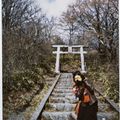
Chapter 1 (Episode 4) ⭐ Kita-in Temple: The Temple That Refuses to Be Ordinary
Kita-in Temple turned out to be far more interesting than the quiet morning suggested.
At first glance it looked like any other peaceful Japanese temple—gravel paths, wooden halls, the usual “please behave yourself” atmosphere.
But the more I wandered, the more the place revealed its little secrets, like a shy old man who suddenly decides to tell you he once worked for the Prime Minister.
For starters, parts of Edo Castle—yes, the legendary home of the shoguns—were literally moved here after a great fire centuries ago.
Which means I was standing in rooms where Tokugawa Ieyasu possibly ate breakfast, meditated, or complained about politics.
Imagine the founder of a 260-year-long peaceful regime, a man so important that Japanese school kids are still forced to memorize his name.
After a massive fire burned down parts of Edo Castle, entire sections of the shogun’s residence were moved here—yes, physically moved,
Japan-style: politely, precisely, and probably with a lot of bowing.
The idea that the shogun’s private chambers were now open for tourists like me was strangely comforting.
Not far from the omikuji machine stood one of Kita-in’s most curious attractions:
the Gohyaku Rakan—five hundred stone “rakan” statues, each supposedly representing an enlightened disciple of Buddha.
In practice, they looked more like five hundred stone villagers caught in various moments of very human emotion.
Some smiled gently, others frowned like they’d just remembered an unpaid bill, and a few had expressions so peculiar that I wondered whether enlightenment involved being permanently puzzled.
Locals say no two statues are alike, and after wandering among them for a while, I began to believe it. It felt a bit like scrolling through five hundred profile pictures—except these ones weren’t trying to look younger or thinner, and none of them used filters.
People say you can often find “your” rakan, the one whose face resembles yours. I didn’t find mine, though a perpetually lost-looking one came awfully close.
Further along, a small shrine tucked into a corner offered a quietness so complete it felt like the gods took the morning off and left the place in my care.
Even the wind seemed to tiptoe.
Kita-in isn’t just a temple—it’s a small world of its own: history, humor, and a touch of divine bureaucracy all wrapped in a calm morning chill.
#JapanTravel #SoloTravel #JapaneseCulture #Gunma #Kawagoe #KitaInTemple
#TravelStory #BlockditTravel #OnsenJourney #Nagaretabi #เล่าเรื่องเที่ยว
#เที่ยวญี่ปุ่นคนเดียว #ทริปญี่ปุ่นหน้าหนาว #TravelWriter
- ●“Rakan” (羅漢) คืออะไร?
“Rakan” หรือ Arhat ในภาษาสันสกฤต คือ สาวกผู้บรรลุธรรม ในพระพุทธศาสนา
—เป็นผู้ที่ตรัสรู้ถึงความจริงของโลก แต่ยังไม่ได้ถึงขั้นพระพุทธเจ้า
ดูเพิ่มเติมในซีรีส์
โฆษณา
- ดาวน์โหลดแอปพลิเคชัน
- © 2026 Blockdit